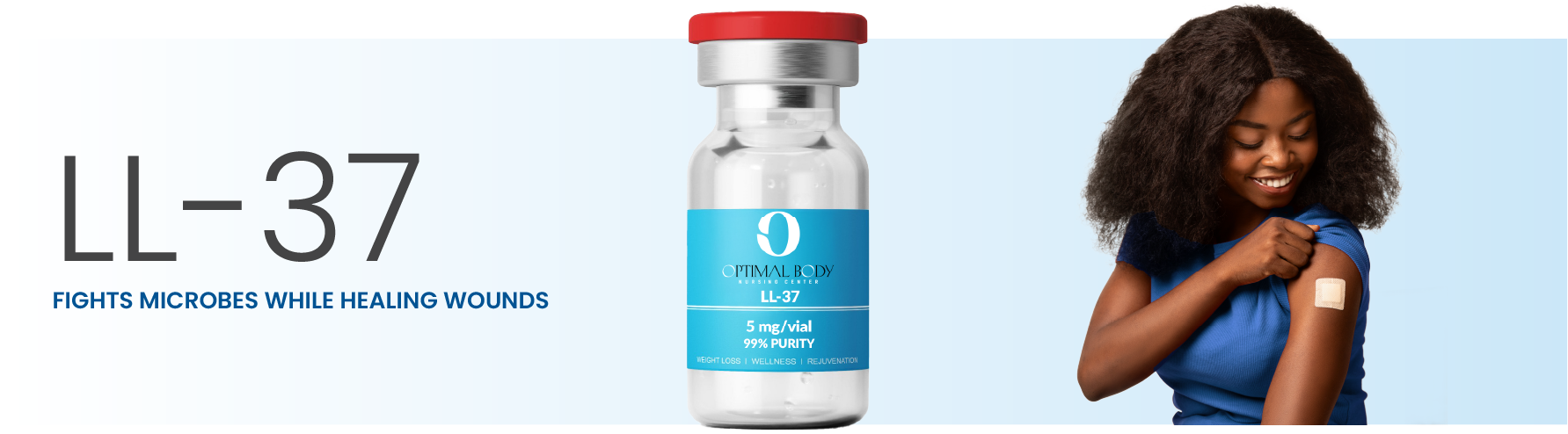







Boosts your body's ability to fight viral and bacterial infections.

Helps reduce chronic inflammation, a key factor in many chronic diseases.

Supports the health and function of your cells, protecting them from damage.

By maintaining a strong and balanced immune system, it can contribute to healthier aging.

Helps the body's cells protect themselves from external threats and stressors.

In the constant battle between host organisms and microbial invaders, the innate immune system plays a crucial role as the first line of defense. LL-37 is multifunctional: it defends against pathogens, modulates immune responses, and supports tissue repair.
Numerous in vitro and in vivo studies have confirmed LL-37’s antimicrobial and immunomodulatory roles:
Research published in Antimicrobial Agents and Chemotherapy found LL-37 effective in neutralizing LPS and minimizing associated cytotoxic effects [1].
Investigations have also shown LL-37’s role in tissue repair. For instance, it was found to stimulate airway epithelial cell proliferation and promote wound closure [2].
These findings reinforce LL-37’s multifaceted value as both a microbial defense tool and a regulator of the immune microenvironment.


R. Shaykhiev et al., “Human endogenous antibiotic LL-37 stimulates airway epithelial cell proliferation and wound closure,” Am. J. Physiol. Lung Cell. Mol. Physiol., vol. 789, no. 5, pp. L842-848, Nov. 2005.
X. Chen et al., “Synergistic effect of antibacterial agents human β-defensins, cathelicidin LL-37 and lysozyme against Staphylococcus aureus and Escherichia coli,” J. Dermatol. Sci., vol. 40, no. 2, pp. 123–132, Nov. 2005.
K. L. Brown et al., “Host defense peptide LL-37 selectively reduces roinflammatory macrophage responses,” J. Immunol. Baltim. Md 1950, vol. 186, no. 9, pp. 5497–5505, May 2011.
The content on this website is for informational and educational purposes only and should not be considered medical advice.